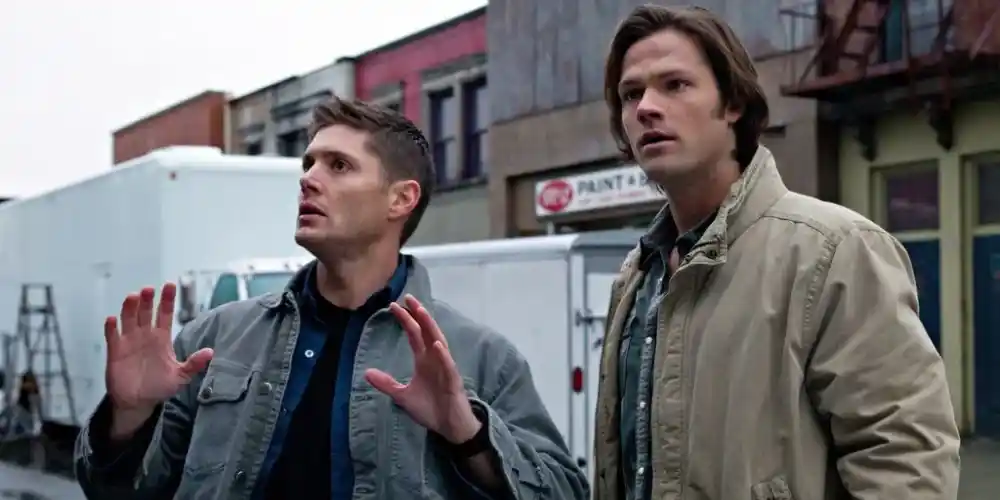
Fifteen seasons is a long run for any show, and when Supernatural finally wrapped in 2020, it did so with a finale that split its fanbase right down the middle. Some loved the quiet, emotional send-off. Others felt cheated. But regardless of how people feel about how it ended, one thing has become increasingly clear over the years since: the Winchesters might not be done yet. Both Jared Padalecki and Jensen Ackles have said, more than once, that they’d be willing to step back into the roles of Sam and Dean if the right project came along. Nothing official has been announced, no revival series, no movie, nothing concrete. But the door hasn’t been closed either, and fans have been holding onto that sliver of hope for years now.
While we wait to see whether the Winchesters ever pick up their weapons again, it’s worth looking back at just how many times Warner Bros. and the CW tried to stretch this universe beyond its two original leads. Most casual fans probably remember The Winchesters, the prequel series that came and went in a single season. But that wasn’t the first attempt, and it wasn’t the only one that fell apart before really getting off the ground. There’s a surprisingly long history of spin-off attempts here, some that never made it past a single test episode, and understanding why they failed says a lot about what actually made Supernatural work in the first place.
The First Attempt: Supernatural: Bloodlines
Long before The Winchesters existed, there was Supernatural: Bloodlines, originally titled Supernatural: Tribes. This one dates back to Season 9, when writer Andrew Dabb, who would later take over as showrunner, teamed up with director Robert Singer to create a backdoor pilot. The episode was called “Bloodlines,” and it aired as a regular episode of Supernatural while quietly functioning as a test run for an entirely new series.
The premise centered on Chicago, a city Sam and Dean discover is secretly run by a network of monster families, essentially a supernatural mafia controlling the city’s infrastructure from the shadows. After Sam and Dean stumble onto this conspiracy, they hand the case off to Ennis Ross, a police academy trainee turned hunter played by Lucien Laviscount, whose fiancée had just been killed outside a club frequented by monsters. From there, the plan was for the story to shift focus entirely away from the Winchesters and onto Ennis as he took on the five monster families controlling the Windy City.
Ennis wouldn’t be working alone, either. The proposed series introduced David Lassiter, a shapeshifter played by Nathaniel Buzolic, who wanted to end a generations-long blood feud between his own family and that of his werewolf lover, Violet Duval, played by Melissa Roxburgh. On paper, it’s a genuinely interesting concept. A diverse ensemble cast, an urban setting, family drama layered on top of monster mythology. It leaned heavily into the kind of romantic, youth-driven storytelling that the CW was known for at the time, while still keeping enough horror elements to feel like it belonged in the Supernatural universe. Shows like Angel, spun off from Buffy the Vampire Slayer, and The Originals, spun off from The Vampire Diaries, had already proven that this formula could work. Both followed similar blueprints: humans and supernatural beings colliding in a major city, love and loss intertwined with monster-of-the-week plots.
So why didn’t Bloodlines happen? Andrew Dabb later admitted the timing simply wasn’t right, noting that the concept was “probably a little too similar to The Originals,” which had premiered around the same period. But there was more to it than bad timing. Dabb also confessed that the team had been trying to build “something set in the Supernatural world but very unlike Supernatural,” and that’s really where things fell apart. The backdoor pilot episode itself ended up being one of the most poorly received hours of Season 9. The new characters didn’t have the chemistry or the years of built-up history that made Sam and Dean so compelling to watch. The story wasn’t bad exactly, but it didn’t hit the same emotional register as the Winchesters’ earlier, revenge-driven seasons.
It’s an interesting comparison to make with Chris Carter’s spin-off attempts for The X-Files. His show Millennium only ran for three seasons, but it built a loyal cult following because it committed to being its own distinct thing, only loosely tied to The X-Files through Carter as creator, before eventually crossing over later on. Compare that to The Lone Gunmen, which followed three recurring X-Files side characters and lasted a single season. That series leaned too hard on X-Files fans for support despite having a wildly different tone, and it never managed to stand on its own before those characters were quietly pulled back into the parent show. Bloodlines made a similar mistake, just in reverse. It tried to distance itself too far from the Winchesters tonally while still depending on the Supernatural name to get viewers in the door. That’s a tricky balance to strike, and the show never quite figured it out.
Round Two: Supernatural: Wayward Sisters
A few years later, Dabb and Singer tried again, and this time expectations were much higher. Season 13’s episode “Wayward Sisters” served as the backdoor pilot for Supernatural: Wayward Sisters, and unlike Bloodlines, this one had years of groundwork already laid. Fans had spent seasons getting attached to Sheriff Jody Mills, played by Kim Rhodes, and Sheriff Donna Hanscum, played by Briana Buckmaster. More recently, the show had introduced Claire Novak, played by Kathryn Newton, and Alex Jones, played by Katherine Ramdeen, both of whom had become fan favorites in their own right.
Season 13 doubled down on this groundwork, introducing psychic Patience Turner, played by Clark Backo and granddaughter of the late Missouri Mosely, along with dream walker Kaia Nieves, played by Yadira Guevara-Prip. These characters were woven into the main show’s plot involving the search for Sam and Dean’s missing mother, which gave them a legitimate reason to exist within the Supernatural narrative rather than feeling bolted on. The idea was simple: build a strong enough ensemble around Jody and her makeshift found family in Sioux Falls, South Dakota, that audiences would want to follow them into their own series. Andrew Dabb later described the pitch as feeling “more like an outgrowth of Supernatural” rather than a random side story, and honestly, that tracks. Unlike Bloodlines, this concept didn’t need to invent a whole new cast from scratch. It just needed to expand outward from characters people already cared about.
Given how much narrative real estate the parent show had spent building up this cast, it seemed like a near-guaranteed pickup. The idea of Jody, Donna, Claire, Alex, and the rest protecting Sioux Falls from monsters while Sam, Dean, Castiel, and Jack handled things elsewhere felt like a natural next chapter for the franchise. Dabb reportedly wanted frequent crossovers between the two shows, which likely would’ve boosted the spin-off’s ratings early on by giving fans a reason to tune in. But the CW passed on it anyway. Nobody’s ever given a fully satisfying explanation for why. Some speculated the network was uneasy with the show’s female-led, “girl power” framing. Others think the CW simply didn’t have confidence that a Supernatural spin-off could survive without Sam and Dean anchoring it, especially with the flagship series’ end already coming into view. Whatever the actual reasoning was, it was a disappointing outcome for a concept that had far more built-in support than Bloodlines ever did.
The One That Actually Got Made: The Winchesters
It took until after the original series ended for a spin-off to finally make it past the pilot stage. In 2022, The Winchesters premiered on the CW, developed by former Supernatural writer Robbie Thompson and executive produced by Jensen Ackles himself. Ackles didn’t just produce the show; he also returned as Dean Winchester in a framing device, narrating the story as an older Dean looking back on his parents’ history.
The series followed younger versions of John Winchester, played by Drake Rodger, and Mary Campbell, played by Meg Donnelly, set in 1973, years before Sam and Dean were even born. It was originally billed as a prequel, but partway through its run, the show revealed a twist: this wasn’t simply flashback material. It was actually taking place on an alternate Earth, existing after the events of the Supernatural series finale, “Carry On.” That reveal gave the show a much more direct tie to the original series than a standard prequel would’ve had.
In the finale episode, Dean crosses over into this alternate world to help the “Monster Club,” John, Mary, and their circle of hunter allies, deal with a threat that had followed him from his own reality. It’s a clever narrative device, since it doubles as a kind of epilogue for Dean’s arc in the main series, hinting that his story might not be entirely finished. Even Bobby Singer, played by Jim Beaver, and Jack, played by Alexander Calvert, showed up, along with other familiar faces from the original show reprising their roles. It was, in many ways, the most successful attempt yet at expanding the Supernatural universe.
Unfortunately, success didn’t translate into longevity. The Winchesters was canceled after just thirteen episodes, reportedly due to a wave of internal restructuring at Warner Bros. Discovery around that time. Ackles and the rest of the creative team tried to shop the series to other networks and streaming platforms, but nothing materialized. It’s a pattern that’s hard to ignore at this point: every Supernatural-branded project that’s tried to exist without both Sam and Dean front and center has eventually collapsed, no matter how much potential the concept had going in.
That’s what makes the current moment feel a little more hopeful, though. In 2026, Ackles, Padalecki, and Misha Collins all reunited on screen together in the final season of The Boys, marking their first time sharing scenes in years. It’s not a Supernatural revival by any means, but it’s a reminder that these three still have chemistry, and that the door for something more official hasn’t shut for good. Nothing has been confirmed. No revival series, no movie, nothing beyond speculation. But given how many times this franchise has tried and failed to expand without its two original leads, maybe the real lesson here is obvious: any future for this universe probably needs Sam and Dean back at the center of it.
Supernatural is currently streaming on Prime Video and Peacock in the U.S.